General
Real Truth of the Patient Professor academy

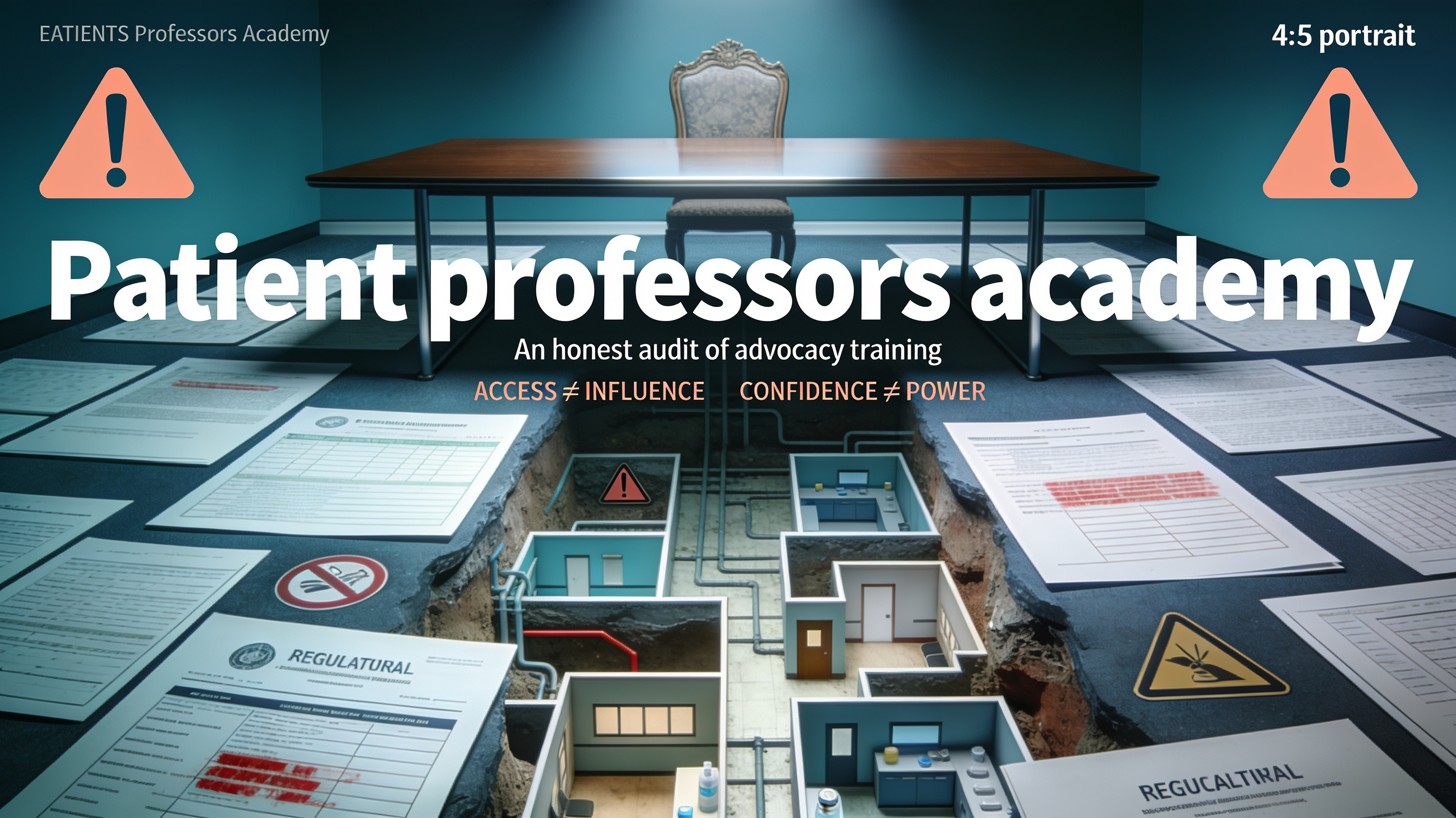
Every advocacy training program deserves an honest audit — not a takedown, an audit. So here’s mine of the PATIENTS Professors Academy, stripped down to what actually matters: what’s missing.
The truth is simple. This program is not a policy training ground. It’s a structured brainstorming exchange where patients and researchers build a shared vocabulary and a sense of belonging. That has value. But it is not the same as arming people to challenge entrenched, obdurate systems, and pretending otherwise does a disservice to everyone who walks away believing they now have real leverage.
Here’s what the Academy is missing.
No instruction in reading a clinical trial protocol with a critical, assiduous eye. No root-cause methodology for diagnosing why a broken system produces the outcomes it does. No training in the actual mechanics of influence — FDA comment procedure, CMS rulemaking, how legislation gets written, amended, or quietly killed in committee. No module on conflict-of-interest navigation, despite heavy pharmaceutical industry sponsorship sitting behind this program. Graduates come out equipped to sit at the table. Nothing equips them to determine whether that seat was ever more than ornamental.
The stated learning objectives confirm it. “Exercise cultural humility.” “Bridge gaps.” “Create a common language.” These are relational goals, not structural ones. There is no mechanism anywhere to measure whether a graduate’s advisory input actually changed a formulary decision, a research protocol, or a reimbursement policy. Without that accountability metric, the model risks becoming an elaborate exercise in patient-engagement theater — sincere in intention, nebulous in measurable impact.
Confidence is not power. Access is not influence. If the Academy genuinely intends to produce advocates capable of confronting a labyrinthine, resistant healthcare system, the curriculum needs unglamorous, technical substance: data literacy, regulatory process, conflict-of-interest scrutiny, and outcome tracking that proves the seat at the table was worth taking.
Patients don’t need another forum to be heard. We need the tools to know whether being heard ever changed anything at all.



1 - 4 of 4 Replies
Let this place be a peaceful sound board. You sound really frustrated. I hope you find something here to inspire you and know you are probably not the only person who feels the things you do. We have all banged our heads against the system walls at some point. It's not fun. What transplant did you have? I am Tia. 3 years post liver transplant.
Appreciate it @TiaBean. :)
Not frustrated it’s the truth. These summits are nothing more than an opportunity for Instagram credibility. They do nothing to address these assiduous policies that have taken down patients decade after decade! people that continue to post about being a graduate of this program are looking more for an ego stroke and that’s the truth. It’s not frustration.
I think you should watch what you say about people here. I would think as a transplant patient, you would enter any space with respect and understanding. You could phrase things with kindness and curiosity. You catch more flies with honey rather than vinegar.