

Twelve years after my kidney transplant, it’s impossible to ignore both the freedom it’s given me but also one of its most serious challenges: skin cancer. With a family history of cancer and lifelong immunosuppression, I knew the risk was real.
After an initial diagnosis in 2021 and back-to-back diagnoses in late 2025/early 2026, I felt compelled to share my journey with biopsies, Mohs surgeries, and wound complications so others can benefit from my experiences.
Ultimately, here’s what I learned:
Stay vigilant about checking your body. Trust your gut. Don’t ever settle for appointments that seem eons away. While skin cancer is a common transplant experience, it’s valid to express displeasure if it happens to you. It may happen again. You can complain that time too. Your gratitude for a life-saving transplant is in no way diminished by being angry (or frustrated) you may have to endure skin surgeries, physical pain, stress, and medical bills. You’re not alone. The TransplantLyfe community is here for you.
This is my story…
——
Recently, when driving back home from an evening concert in New York City, I reflected on my health and all the gifts my kidney transplant has afforded me in the almost twelve years since my surgery.
The ability to enjoy a night out with friends, experiencing my favorite pastimes (live music) without having to worry about rushing home early to plug into a peritoneal dialysis cycler for 10 hours, is certainly at the top of that gratitude list.
However, the following morning, in stark contrast to the previous night’s fun, I woke up very early for a not-so-pleasant aspect of transplant life: addressing skin cancer (again).
I’m currently 39 years old and my first experience with the dreaded “c”-word occurred in middle school when my father required invasive surgery to remove a melanoma on his arm. At the time, there was concern it had spread to his lymph nodes. Thankfully, the tumor was fully excised and Dad was OK. In the years since, he faced numerous instances of skin cancer, many of which involved Moh’s Surgery to resolve. (More on this highly effective removal technique later.)
When I received my living donor transplant from a close friend in 2014, I was told about the heightened risk of skin cancer due to the immunosuppressive drugs I would be taking for life. When factoring in family history, skin vigilance had to become an important part of my overall routine. Hats and high-SPF sunscreen became staples of my summer. I started seeing a dermatologist once a year for full-body screenings and tried my best to keep mental track of anything on my body that seemed off. Occasionally, some skin lesions such as actinic keratoses were frozen or burnt off just to be safe and to ensure these pre-cancerous conditions didn’t evolve.
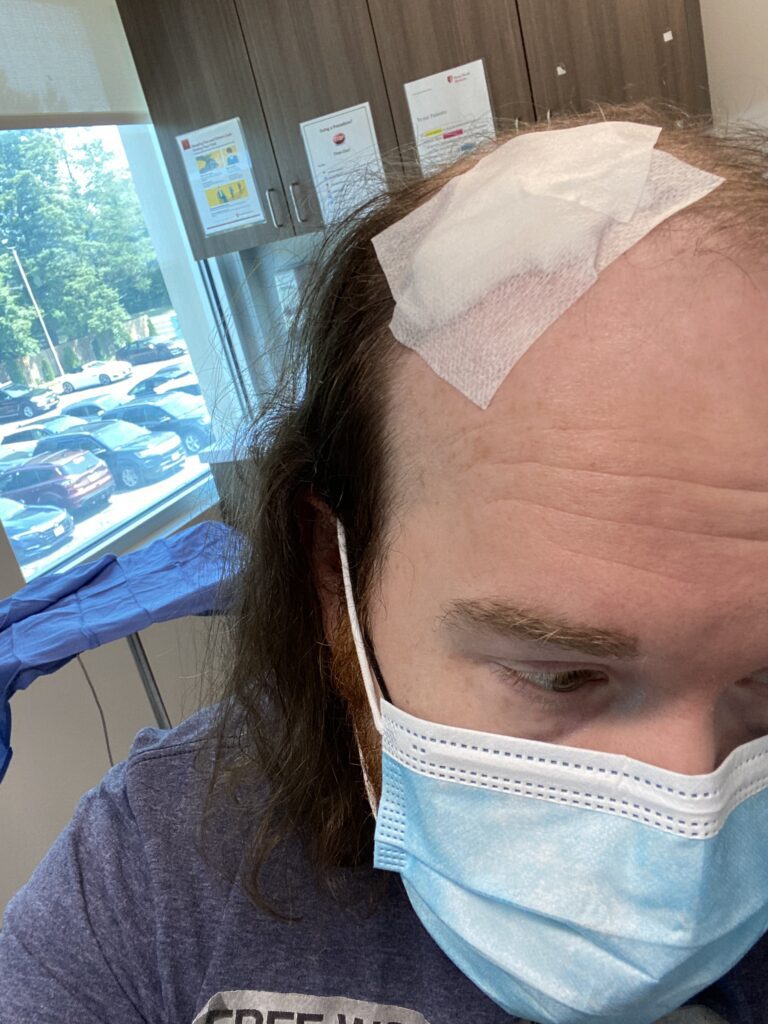
In May of 2021, 7 years post-transplant, I noticed a small, dime-sized mark on the front of my hairline. Initially thinking it was just dry skin, I applied cream and observed it over the course of a few days. Nothing changed and my gut felt that something was wrong. I called my dermatologist who unfortunately was booked out about 8 weeks. I took the next available appointment on June 28th, we biopsied the spot via a tiny surgical cut, and on July 4th weekend I received a call noting the sample was a basal cell carcinoma. My first-ever Moh’s Surgery was scheduled for the next morning, and I was told to bring a book or something to occupy my time as the procedure could take upwards of 3 hours.
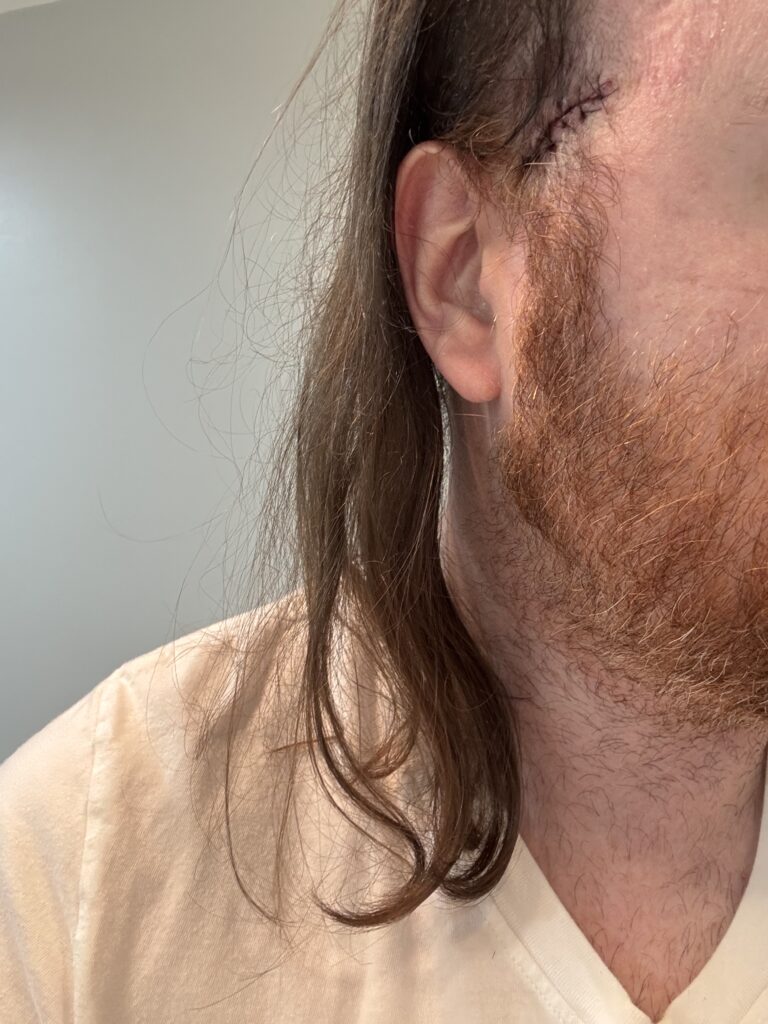
Moh’s Surgery involves numbing the area with local anesthesia followed by extremely precise surgical removal of tissue, which is then viewed under a microscope to detect cancer cells along the edges. No cancer cells, no more surgery. If cells are present at the edges, it’s time for more cutting. The wound is commonly sutured closed or cosmetically restructured using skin grafts or synthetic skin substitutes, depending on the location and size of the gap. Moh’s is highly effective for skin cancer, with success rates as high as 99% according to Johns Hopkins Medicine.
While I was very grateful the cancer was gone, I was still annoyed it took me weeks to get a proper office visit. After doing some online research, I found another clinic, which was highly rated, took my insurance, and even offered night hours and same-day appointments. I never returned to my prior provider.
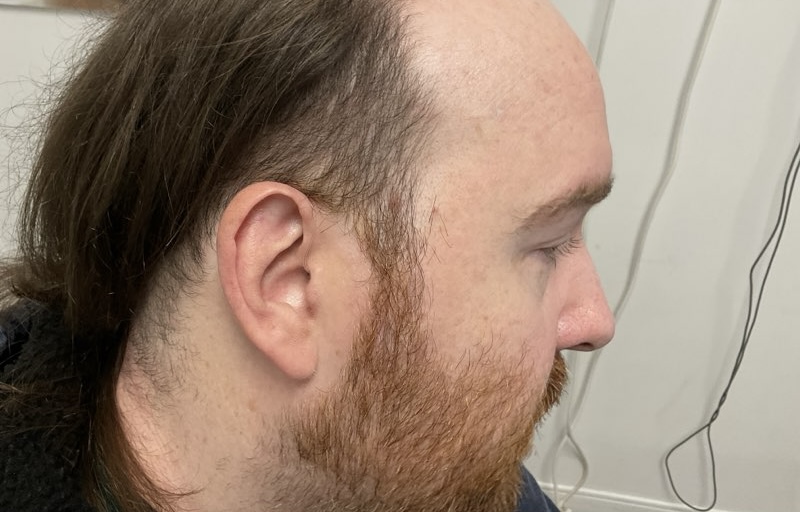
Fast forward to the Fall of 2025, when I noticed a small tan colored spot just above my sideburn. My current dermatologist had me come in right away; the spot was frozen, and a few weeks later, it was out of sight and mind. Until it wasn’t. By December, the spot began crusting again and a biopsy confirmed the presence of a basal cell. I opted for Moh’s right away, pre-holidays. I forgot how much the local anesthesia needles hurt when entering the skin. I was quickly reminded of how the fresh incision felt a few hours later once the meds wore off. The sutures on the side of my head were TIGHT and sleeping was very uncomfortable. On New Year’s Eve, we removed the sutures, closing the door on that situation, and randomly biopsied a bleeding spot on my leg, which I initially thought was a minor cut.
The first week in January 2026, I had a voicemail from the dermatologist about “the results” from my leg. Since they didn’t leave good news on my line, I assumed the obvious: more cancer. Sometimes I hate it when I’m right.
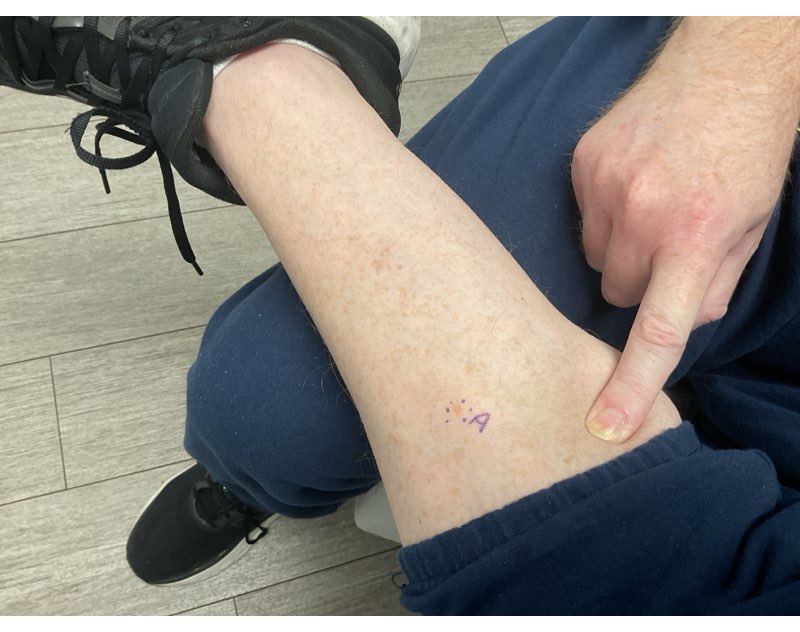
The leg biopsy site wasn’t healing well, likely due to me being immunocompromised, but after a few days of topical creams, on January 15th, I had Moh’s for the second time in under a month. This spot was on the shin of my left leg. Same painful needles, same rude awakening hours later when the numbing meds wore off. Sleeping was OK but standing up and feeling the blood flow to the wound was OUCH.
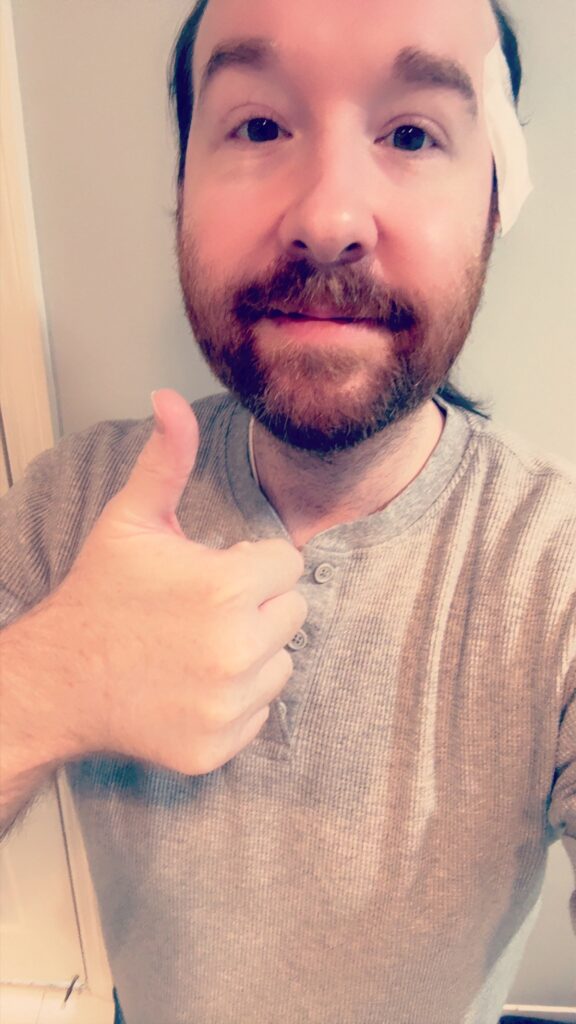
On January 18th, still reeling from the pain in my leg, I woke up to tons of blood on my pillow. Despite my head sutures having been removed weeks prior, the center of the wound reopened exposing a gaping hole. This is known as wound dehiscence. It can happen even with a perfect suture job due to a multitude of factors. Thankfully, no infection was present.
On January 19th, the wound was re-sutured, and I was back to bandages and the TIGHT pain. We agreed to leave these stitches in longer than usual and will do the same with my shin sutures.
While more cancer in my future is uncertain, all I know for sure is that I will be going to another concert next week.



